Orders over $99 may qualify for free shipping.
Ground Bed Guidelines for Effective Electric Fence Performance
The ground bed is one of the most important—and often most overlooked—parts of an electric fence system. While most of the focus tends to fall on the charger or the fence wire itself, the effectiveness of the system depends just as much on proper grounding. A poorly designed or insufficient ground bed can weaken the fence’s performance, making it less reliable and even causing stray voltage issues that interfere with nearby equipment or utilities.
A properly installed ground bed ensures that the electric current flowing through the fence has a reliable return path back to the energizer. When an animal touches the fence, electricity travels through the animal, into the ground, and back to the energizer through the ground rods. If that return path is compromised—either by poor soil conductivity, shallow rods, or interaction with other grounded systems—the entire fence system suffers.
To create a ground bed that supports strong, consistent performance, follow these key guidelines:

1. Use a Minimum of Three Ground Rods
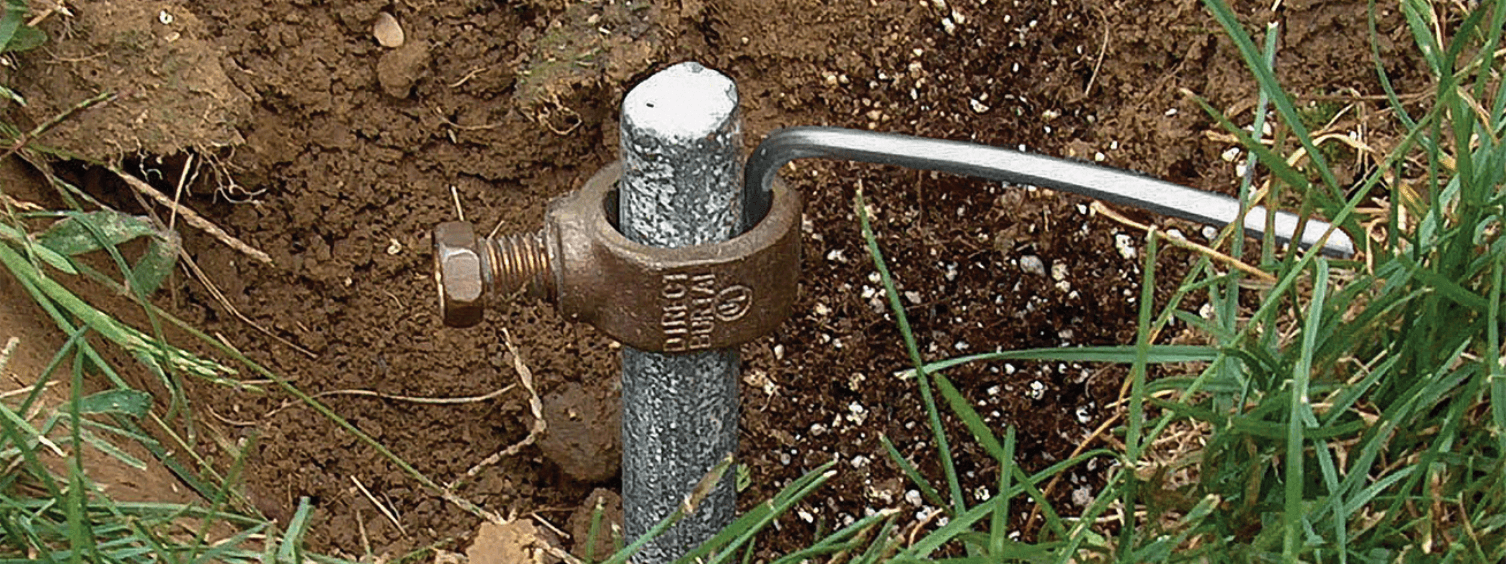
The starting point for any ground bed is the installation of at least three ground rods. These should be placed in a straight line and spaced at least 10 feet apart from one another. This spacing ensures that each rod has adequate exposure to the surrounding soil and isn’t pulling current from the same compact area, which can reduce grounding efficiency.
Keep in mind that more powerful energizers require more extensive grounding. As a general rule, you need at least 3 feet of ground rod for every joule of output. For example, a 6-joule energizer would require at least 18 feet of total ground rod length—often three 6-foot rods or four 5-foot rods, depending on soil conditions and layout.
2. Avoid Interference with Other Ground Systems
Your electric fence ground bed must be completely independent of any other grounded systems, including those used by electrical service lines, water pumps, building wiring, or utility poles. If these systems are too close together, the electric current from your fence may find its way into those systems, causing interference, equipment malfunctions, or even safety hazards.
To prevent this, locate your ground bed at least 50 feet away from any other ground system. This distance reduces the chance that your ground rods will overlap with other grounding networks underground.
3. Watch for Buried Utilities
In addition to avoiding other ground beds, make sure your chosen ground bed site is clear of buried cables, water lines, gas pipes, and communication lines. Electricity always seeks the path of least resistance—and if those buried utilities provide an easier return path than your ground rods, current may flow into places it shouldn’t. This can damage equipment or disrupt service to nearby structures.
It’s a good practice to call your local utility marking service before you install ground rods, especially if you’re unsure of what might be underground.

4. Install Close to the Charger When Possible
The ideal location for the ground bed is as close to the energizer as possible. A short connection between the charger’s ground terminal and the first ground rod helps minimize resistance and voltage loss. While layout limitations on your property might not always make this possible, keeping the ground system within 20 to 30 feet of the energizer is ideal.
If the charger is located inside a building or on a structure with limited surrounding soil, you can still place the ground bed farther away—as long as you use high-quality insulated cable to connect the energizer to the rods.
5. Choose a Moisture-Rich Area
Soil moisture has a big impact on how well your ground bed performs. Dry, sandy, or rocky soil resists electrical current and can cause grounding problems even with long rods. For best results, install ground rods in a low, damp area—a spot that stays moist throughout the year or where runoff collects naturally.
If your property has consistently dry conditions, consider using longer ground rods, watering the ground during installation, or incorporating ground enhancement materials like bentonite clay or powdered graphite to improve conductivity.
A properly constructed ground bed is essential for getting the best performance from your electric fence system. By using at least three rods spaced 10 feet apart, keeping the system isolated from other grounds and utilities, and selecting a location with good moisture levels, you’ll ensure your fence delivers consistent, reliable shocks when and where they’re needed.
Want help selecting the right rods or materials for your soil type? Explore Kencove’s grounding products or reach out to our team for expert advice on designing a system that works for your property.
🌱 Configure Your Grounding System
Loading fence configurator...