The Complete Guide to Predator-Proof Fencing for Pastured Poultry
By Kencove Farm Fence Supplies | Ships from Eastman, Georgia
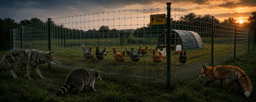
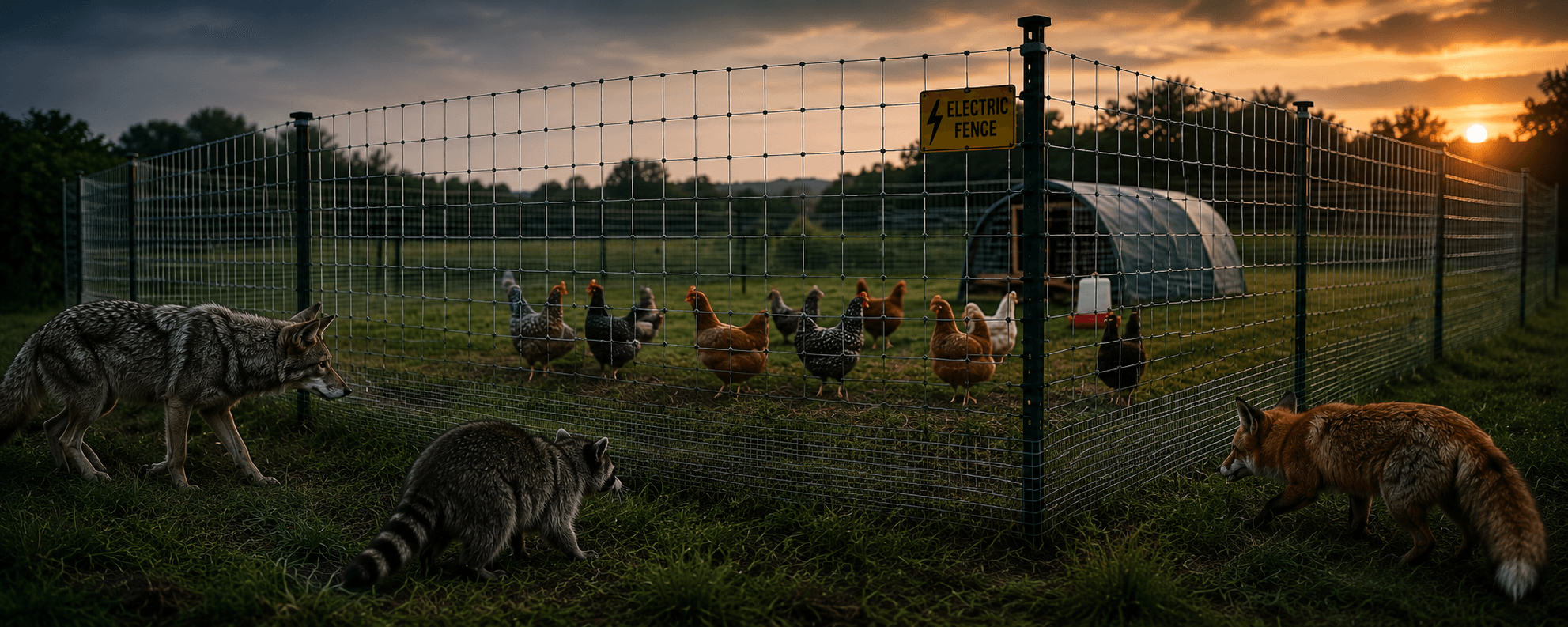
If you're raising pastured poultry in the Southeast, predators aren't a matter of "if" — they're a matter of "when." From coyotes and foxes working the perimeter at dawn to raccoons testing every gap after dark, your birds face threats that a standard chicken coop simply can't address once they're out on pasture.
The good news: the right fencing setup can reduce predator losses to near zero. This guide covers everything you need to know about building a predator-proof fence system for your pastured poultry operation, whether you're running 50 broilers on a homestead or rotating 10,000 layers across pasture in Georgia, Alabama, or anywhere in the Southeast.
Why Pastured Poultry Needs Dedicated Predator Fencing
Traditional coop-and-run setups confine birds to a small area. Pastured poultry is different — your birds are out on grass, often in mobile shelters that move daily or weekly. That mobility is what makes the system work nutritionally and economically, but it also means your birds are exposed to a wider range of predators across changing terrain.
A predator-proof fence for pastured poultry needs to do three things at once: keep birds contained within their designated pasture, deter ground predators like coyotes, foxes, and raccoons from entering, and make the protected area easy to move as you rotate across your land.
Fixed perimeter fencing alone won't cut it for most pastured operations. You need a system that combines electric deterrence with physical barriers — and ideally one that's portable enough to move with your birds.
Know Your Predators: Southeast-Specific Threats
The predator pressure you face depends on where you farm. Here's what pastured poultry producers across the Southeast are dealing with.
Coyotes
Coyotes are the number one predator threat to pastured poultry across Georgia, Alabama, North Carolina, Tennessee, and every other Southeast state. They're smart, persistent, and hunt both day and night. A coyote can clear a 4-foot fence without much effort and will dig under a barrier if it can't go over or through it.
What works: Electric netting at minimum 42 inches tall with a hot wire at nose height (roughly 6–10 inches off the ground). Coyotes typically test a fence with their nose first — one good shock usually keeps them from returning for weeks. Multiple strands of electric wire are less effective than netting because coyotes can slip between strands.
Foxes
Foxes are smaller and more agile than coyotes, and they're excellent diggers. Red foxes are common throughout the Southeast, and gray foxes can actually climb trees and fences. Foxes tend to hunt at dawn and dusk, though they'll come in during daylight if they're hungry enough.
What works: Electric netting is highly effective against foxes. The tight mesh spacing (3–4 inch vertical gaps on quality netting) prevents them from squeezing through, and the electric charge deters climbing and digging. Make sure the bottom wire of your netting sits flush to the ground — foxes will exploit even a 4-inch gap.
Raccoons
Raccoons are the most common nighttime poultry predator in the Southeast. They're strong, dexterous, and will reach through wire mesh to grab birds. A raccoon can tear through lightweight plastic netting and will climb most non-electric barriers.
What works: Electrified netting is the most reliable raccoon deterrent. The shock stops them from climbing, and the mesh spacing prevents reach-through kills. If you're using a non-electric physical barrier, it needs to be heavy-gauge welded wire — not chicken wire, which raccoons can tear apart.
Hawks and Owls
Aerial predators are a reality for any pastured operation. Red-tailed hawks, Cooper's hawks, and great horned owls all take poultry in the Southeast. You cannot legally harm raptors (they're federally protected), so exclusion and deterrence are your only options.
What works: Overhead netting or bird netting stretched across the top of your pasture enclosure works for small areas. For larger pastures, overhead protection isn't practical — instead, provide shelters and cover within the pasture so birds can escape aerial attacks. Mobile shade structures, brush piles, and even pallets propped at an angle give birds somewhere to hide.
Feral Dogs and Neighborhood Dogs
Domestic dogs — both strays and loose neighborhood pets — kill more poultry than most people realize. A single dog can wipe out an entire flock in minutes, often killing for sport rather than food.
What works: The same electric netting that stops coyotes handles dogs effectively. Most dogs retreat permanently after a single encounter with a hot fence.
Feral Hogs
If you're farming in Georgia, Alabama, Mississippi, or the Carolinas, feral hogs are an increasing concern. They won't typically target adult poultry, but they'll destroy feeders, waterers, shelters, and fencing to get at feed — and they'll trample anything in their path, including birds.
What works: Standard poultry electric netting won't stop a determined hog. If you're in hog country, consider a permanent perimeter of heavy-gauge woven wire or hog panels around your broader pasture area, with portable electric netting inside for daily rotation. This two-layer approach keeps hogs out of the entire zone while giving you flexibility for bird movement.
Choosing the Right Fence System for Your Operation
There's no single "best" predator fence for pastured poultry. The right system depends on your flock size, how often you move, your terrain, and your budget. Here are the main options.
Electric Poultry Netting (Recommended for Most Operations)
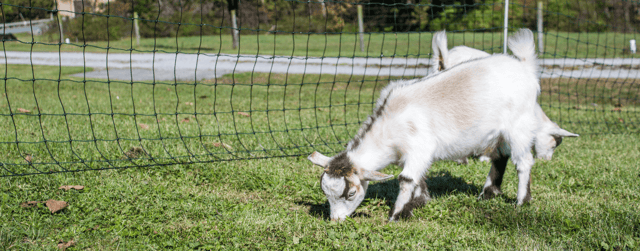
Electric netting is the gold standard for pastured poultry predator protection. It combines a physical barrier (mesh) with an electric deterrent in a single portable package.
How it works: Netting comes in rolls, typically 100 or 164 feet long and 42–48 inches tall. Built-in vertical posts let you set it up in minutes by pushing the posts into the ground. The horizontal strands carry an electric charge from an energizer, delivering a sharp shock to any animal that touches the fence.
Pros:
- Highly effective against coyotes, foxes, raccoons, and dogs
- Portable — one person can move a 164-foot roll in 10–15 minutes
- Doubles as both predator fence and bird containment
- Easy to configure into different shapes and sizes
- No permanent installation required
Cons:
- Requires an energizer (solar, battery, or plug-in) to function
- Vegetation touching the netting can ground out the charge (requires regular weed management)
- Not effective against aerial predators
- Won't stop a determined feral hog
Best for: Operations running fewer than 5,000 birds that rotate pasture regularly. This is the setup most Southeast pastured poultry producers use successfully.
Permanent High-Tensile Perimeter + Portable Interior Netting
For larger operations or properties with persistent predator pressure, a hybrid approach works well. Install a permanent electrified high-tensile perimeter around your total grazing area, then use portable netting inside to create individual paddocks.
How it works: The outer perimeter uses high-tensile wire with multiple hot strands, powered by a high-output energizer. This creates a permanent "fortress" boundary. Inside, you move lightweight electric netting to direct birds to fresh pasture within the protected zone.
Pros:
- Maximum predator protection (two layers of electric deterrence)
- The permanent perimeter handles heavy predator pressure including hogs
- Interior netting can be lighter since predator deterrence is handled by the outer fence
- Scalable for large operations
Cons:
- Higher upfront cost for perimeter installation
- Permanent perimeter requires post-setting and wire tensioning
- More infrastructure to maintain
Best for: Operations running more than 5,000 birds, properties with heavy coyote or hog pressure, and farms that rotate poultry across the same acreage year after year.
Welded Wire or Woven Wire Enclosures
Non-electric physical barriers can work for small, stationary flocks but have significant limitations for pastured operations.
How it works: Welded wire or woven wire fencing creates a physical barrier around the bird area. For predator protection, you typically need hardware cloth (1/2-inch mesh) or heavy-gauge welded wire rather than standard chicken wire.
Pros:
- No energizer needed
- Works during power outages or in areas without solar access
- Effective physical barrier when properly installed
Cons:
- Not practical for frequent moves
- Determined predators (coyotes, dogs) can dig under if there's no buried apron
- Raccoons can climb non-electric wire fencing
- Higher material cost per foot compared to netting for the same protection level
Best for: Small backyard flocks, permanent runs, and stationary shelter areas where birds return to roost at night.
Energizers: Powering Your Predator Fence
Your fence is only as good as the charge running through it. A weak shock teaches predators that they can push through — which is worse than no fence at all, because now they know there's food on the other side.
How Much Power Do You Need?
For predator deterrence, you want a minimum of 4,000 volts on the fence line at all times. That's the reading at the fence, not the energizer's maximum output — vegetation, moisture, and fence length all reduce the delivered voltage. For coyote-heavy areas, aim for 5,000–7,000 volts at the fence.
Energizer sizing rule of thumb: Choose an energizer rated for at least twice the fence length you're running. If you have 600 feet of netting, use an energizer rated for at least 1,200 feet (roughly 3–5 miles, since netting draws more power than single-wire fence).
Solar Energizers
Solar-powered energizers are the go-to choice for pastured poultry because they go wherever the fence goes — no extension cords needed. Modern solar energizers have built-in batteries that store charge for cloudy days.
Southeast advantage: The Southeast gets excellent solar exposure for most of the year. A quality solar energizer will maintain charge even during winter months in Georgia, Alabama, or the Carolinas. Look for units with at least a 3-day battery backup for extended overcast periods.
Best for: Portable netting setups that move regularly, remote pastures without AC power access.
Battery Energizers
Battery energizers (typically running on 12V deep-cycle batteries) deliver more consistent output than solar units and work regardless of weather or shade conditions.
Best for: Operations in heavily wooded areas, winter months in the upper Southeast (Virginia, Tennessee mountains), and backup power situations.
AC (Plug-In) Energizers
AC energizers deliver the most consistent, powerful output. If your pasture area is within reach of an extension cord or you have a permanent perimeter fence near a building, AC is the most reliable option.
Best for: Permanent perimeter fences near structures, large operations with centralized power.
Installation Tips for Southeast Conditions
Fencing in the Southeast comes with specific challenges that Northern farmers don't face. Here's what to account for.
Vegetation Management
The Southeast growing season is long and aggressive. Grass, weeds, and vines will grow into your electric netting fast — especially from May through September. Vegetation touching the fence grounds out the charge and renders it useless.
Solutions:
- Mow or weed-eat the fence line before setting up netting
- Move netting frequently (every 3–7 days) so vegetation doesn't have time to grow into it
- Use a higher-powered energizer that can push through some vegetation contact
- Consider a "low-impedance" energizer designed to maintain voltage even with weed loading
Soil Conditions and Grounding
Good grounding is essential for an effective electric fence. The Southeast's clay soils generally provide excellent grounding — better than the sandy or rocky soils found in other regions. However, during dry spells (common in late summer), even clay soil can dry out enough to reduce ground conductivity.
Solutions:
- Drive ground rods at least 6 feet deep in the Southeast's clay soil
- Use multiple ground rods for larger energizers (3 rods spaced 10 feet apart minimum)
- Water the ground rod area during extended dry spells if fence voltage drops
- Test your ground regularly with a fence tester — poor grounding is the #1 cause of weak fences
Heat and Humidity
The Southeast's heat and humidity can affect both equipment and materials. UV exposure degrades plastic over time, and humidity accelerates corrosion on metal connections.
Solutions:
- Choose UV-stabilized netting rated for Southern sun exposure
- Inspect netting connections and clips regularly for corrosion
- Store netting out of direct sun when not in use
- Keep energizer battery terminals clean and corrosion-free
How to Set Up Electric Poultry Netting (Step by Step)
Here's the practical walkthrough for setting up a standard 164-foot roll of electric poultry netting.
Step 1: Plan your layout. Walk the area where you'll set the netting. Look for low spots where netting might not touch the ground, and clear any tall vegetation along the fence line. Plan where your energizer and gate access point will be.
Step 2: Unroll and stake the corner post. Start at one end and push the first post firmly into the ground. In Southeast clay soil, you may need to step on the post spike or use a rubber mallet during dry periods.
Step 3: Walk out the netting. Carry the roll along your planned fence line, letting the netting unroll behind you. Keep it untangled as you go — fighting tangled netting is the most frustrating part of the process.
Step 4: Set each post. Push each built-in post into the ground as you reach it. The netting should be taut but not stretched tight — slight slack is fine and actually helps the fence absorb animal impacts.
Step 5: Close the loop or connect to a second roll. If you're making an enclosure, bring the last post back to meet the first. Metal clips connect the ends. If you need more length, clip a second roll to the end of the first.
Step 6: Connect the energizer. Clip the energizer's positive lead to the fence wire and the ground lead to your ground rod. Turn it on and test the voltage with a fence tester at the far end of the netting — you should read at least 4,000 volts.
Step 7: Introduce your birds. Move birds into the enclosure after the fence is hot. Some producers let the fence run for a day before introducing livestock so any local predators have a chance to encounter it first.
What a Complete Pastured Poultry Fence Setup Costs
Here's a realistic budget breakdown for a standard pastured poultry predator fence system. Prices reflect typical costs for quality equipment.
| Item | Qty | Estimated Cost |
|---|---|---|
| Electric poultry netting (164 ft rolls) | 4 rolls (656 ft total) | $600 – $900 |
| Solar energizer (rated for 2+ miles) | 1 | $150 – $300 |
| Ground rod kit (3 rods + clamps) | 1 | $30 – $50 |
| Fence tester (digital voltmeter) | 1 | $30 – $80 |
| Netting repair kit | 1 | $15 – $25 |
| Total | $825 – $1,355 |
This setup creates roughly a 160 x 160 foot enclosure (about 0.6 acres) — enough for 500–1,000 broilers or 200–400 layers depending on your stocking density. Scaling up means adding more netting rolls, and potentially stepping up to a more powerful energizer.
For larger operations using the hybrid perimeter + interior netting approach, add $1,500–$3,000 for the permanent high-tensile perimeter depending on total acreage.
Common Mistakes That Get Birds Killed
After decades of working with pastured poultry producers, we see the same mistakes repeatedly. Avoid these and you'll avoid most predator losses.
Underpowered energizer. This is the most common mistake. A weak energizer teaches predators that the fence is beatable. Always oversize your energizer — the extra power is cheap insurance.
Vegetation grounding out the fence. Your fence can read 7,000 volts on day one and drop to 500 volts a week later as grass grows into it. Test regularly and manage vegetation aggressively.
Gaps at the bottom of the netting. Foxes and raccoons exploit even small gaps where netting doesn't contact the ground. On uneven terrain, use extra stakes or short sections of netting to fill low spots.
Not testing the fence regularly. Buy a digital fence tester and use it weekly at minimum. Walk the entire fence line and check for dead spots — a single grounded section can kill voltage across the whole fence.
Relying on chicken wire. Standard chicken wire keeps birds in but keeps nothing out. Raccoons tear it apart, coyotes push through it, and foxes dig under it. It is not a predator fence.
Turning the fence off at night. Some producers turn off their energizer at night to save battery. This is exactly when you need it most — nighttime is prime predator hunting time. If your solar or battery energizer can't run 24/7, upgrade it.
Fast Shipping from Georgia
Kencove Farm Fence Supplies stocks a full line of electric poultry netting, solar and battery energizers, ground rod kits, fence testers, and everything else you need for a predator-proof pastured poultry operation. We ship from our warehouse in Eastman, Georgia — right in the heart of the Southeast's poultry belt — so you get your supplies fast.
Whether you're setting up your first 50-bird homestead flock or scaling a commercial pastured poultry operation, we can help you find the right fencing setup for your property, predator pressure, and budget.
Need help choosing? Call us or check out our Pastured Poultry Fencing collection for complete kits and individual components.
Kencove Farm Fence Supplies has been helping farmers build better fences for over 40 years. We manufacture and stock electric fence, woven wire, high-tensile, and wildlife exclusion fencing at our facilities in Pennsylvania and Eastman, Georgia.